

Red azuki bean


Adzuki Bean / Small Red Bean
赤小豆Chi Xiao Dou·Haricot Azuki rouge
Phaseoli Semen
- Specialist suppliers based in France
- Dispatched within 24/48h, packed to order
- Kept away from light and moisture

Haricot azuki 赤小豆
Vigna umbellata
Wu Qijun, Zhiwu mingshi tukao, 1848
According to the classical texts
利水消肿 解毒排脓
Pinyin
Li Shui Xiao Zhong · Jie Du Pai Nong
Overview
The small elongated red beans of Vigna umbellata (to be distinguished from the rounder red adzuki of Vigna angularis, Chi Dou, though the confusion is common and tolerated in cookery).
Grown in Asia for thousands of years, they are at once a food of traditional cookery (Japanese anko, the sweet red paste of Cantonese desserts, congee) and a plant of the orthodox pharmacopoeia.
Their intense red colour is the visual signature of what usage attaches to the Blood and to the movements of Fire and Blood.
Traditional uses
The reference food-herb for freeing the fluids in excess gently, particularly on constitutions of damp stasis, and for clearing gently the heat in the Blood.
An emblematic food-herb of the supplementing cookery of Asia, at home in the pharmacopoeia as much as in sweet dishes.
Preparation and traditional-use quantity
- Everyday cooking: soak for 4 hours then cook for 1 hour in water, used in congee, soups and traditional desserts
- traditional decoction: 30 to 60 g, simmer for 45 minutes minimum
- Azuki paste (Anko): the Japanese tradition, cooked into a sweet paste for pastries
- Cantonese Tang Shui: the traditional sweet soup with azuki and rock sugar
Precautions
To be boiled or soaked before consumption.
To be used in moderation in cases of already very loose stools or of a constitution of markedly deficient (its freeing nature can add to inner dryness).
In the same family

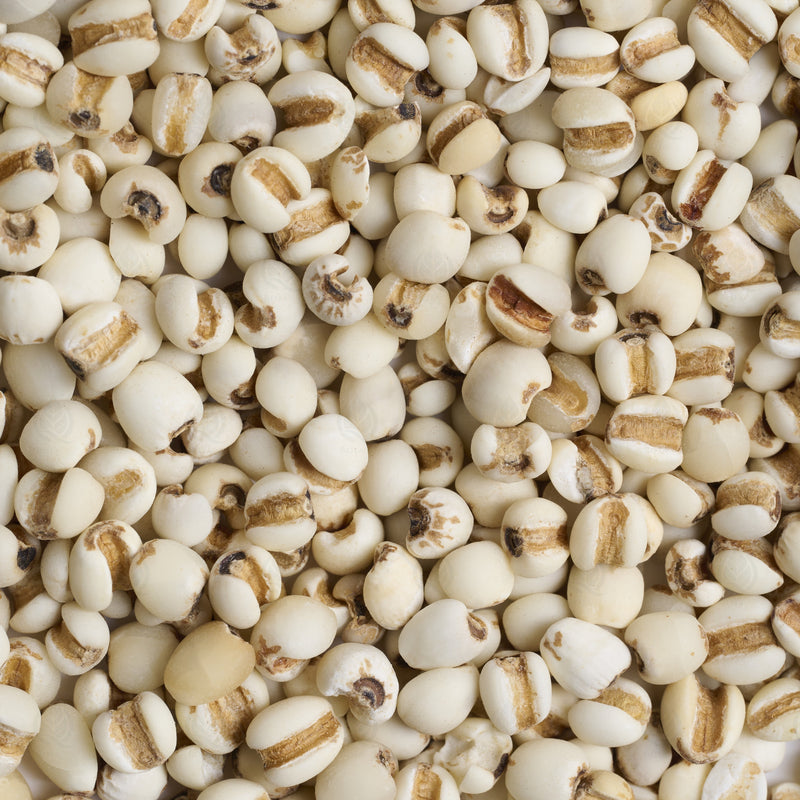

Job’s tears (Coix)
薏苡仁 · Yi Yi Ren
4,00 €


Chinese loosestrife
金钱草 · Jin Qian Cao
7,80 €