

White peony root


White Peony Root
白芍Bai Shao·Racine de Pivoine blanche
Paeoniae Radix Alba
- Specialist suppliers based in France
- Dispatched within 24/48h, packed to order
- Kept away from light and moisture

Bu Xue 补血 血
Deep-coloured roots and fruits
Lycium barbarum
Wu Qijun, Zhiwu mingshi tukao, 1848
According to the classical texts
养血敛阴 平肝止痛 柔肝止汗
Pinyin
Yang Xue Lian Yin · Ping Gan Zhi Tong · Rou Gan Zhi Han
Overview
The root of Paeonia lactiflora, the herbaceous peony, to be carefully distinguished from the tree peony (Mu Dan Pi).
The root is harvested in autumn from 4-year-old specimens, scalded to loosen the bark, then dried and cut into rounds of an ivory white with pink glints.
Its light bitter-sour savour and its very subtle scent conceal the weight the classical texts give it.
Distinct from the red peony (Chi Shao), which comes from the same plant but is not peeled: the tradition places Bai Shao in the Bu Xue register of the Blood, and Chi Shao in the Huo Xue register.
Traditional uses
The reference herb for enriching the Blood and for the register of Wood (which the tradition ties to the harmony of the Blood’s rhythms, to the frame (Jin Gu) and to the vital impulse).
Traditionally used for constitutions of deficient Blood of Wood, with tension in the frame (Jin Gu), disturbed rhythms of the Blood, or irritability from a poorly rooted Yang of Wood.
Preparation and traditional-use quantity
- Decoction: 6 to 15 g, simmer for 30 minutes
- Si Wu Tang: the queen blend of the Blood (with Dang Gui, Shu Di Huang, Chuan Xiong)
- Xiao Yao San: a blend for freeing blocked Wood Qi, attached to the Blood
- Chi Shao distinction: Bai Shao enriches and gathers in, Chi Shao moves and clears, not to be confused
Precautions
To be avoided in cases of deficient Yang with deep cold. Classical incompatibility with Li Lu (Veratrum).
Widely used in blends for women’s constitutions.
In the same family


Dried longan
龙眼肉 · Long Yan Rou
9,00 €

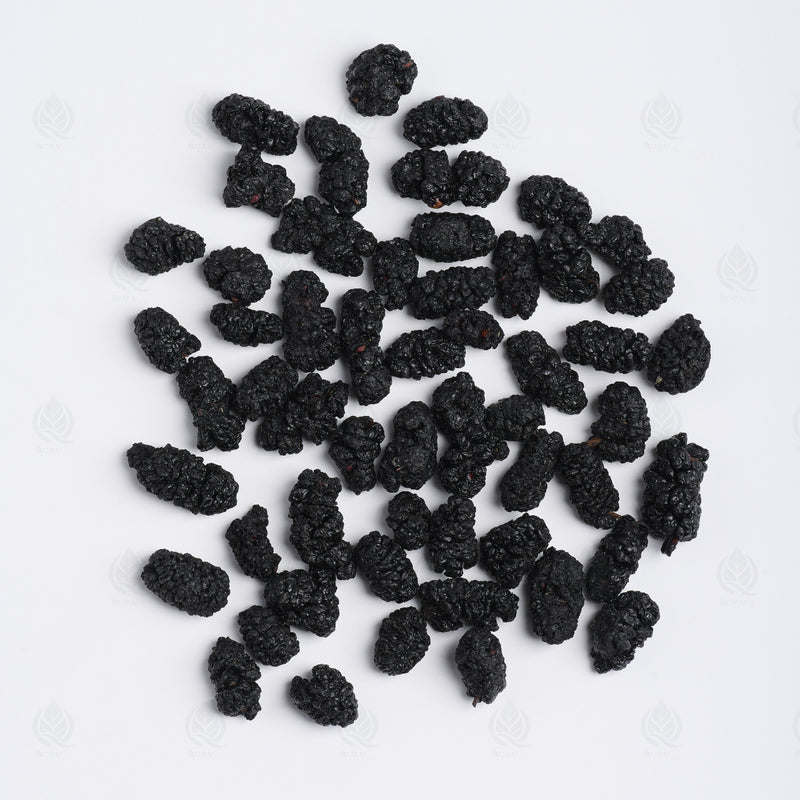

Dried mulberries (White mulberry)
桑椹子 · Sang Shen Zi
6,80 €

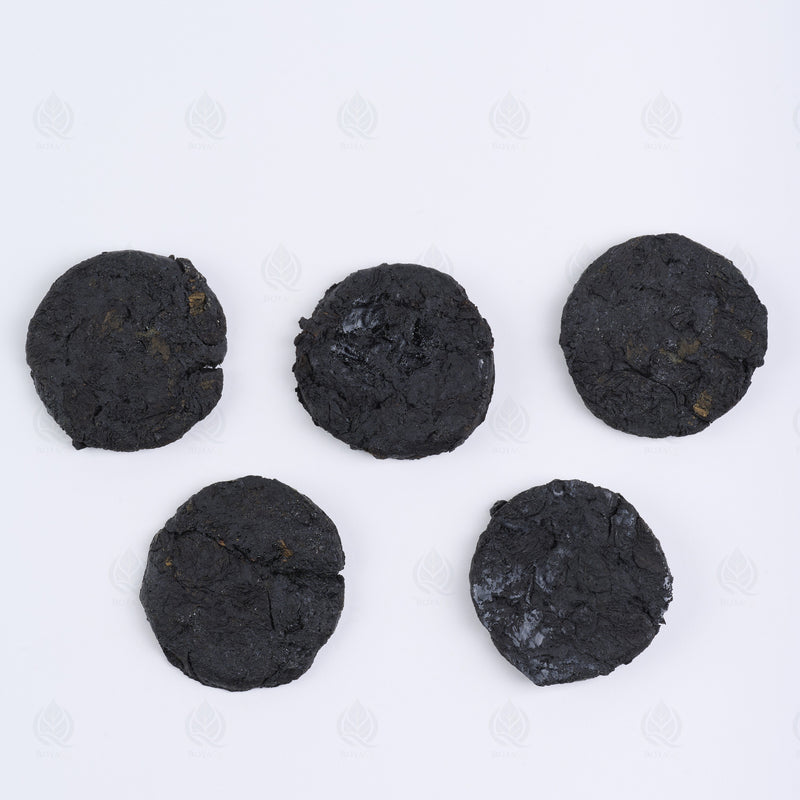

Rehmannia root (prepared)
熟地黄 · Shu Di Huang
9,00 €