The August air has that particular mugginess, the kind that clings to the skin on coming out of the nap and lays a golden torpor over things.
At the stalls, gourds follow the peaches, the first grapes sit beside the last tomatoes.
This is the hour of patient kitchens, of windows ajar on the evening as it cools; the hour, above all, of tuning the table to this in-between season, where summer lingers and autumn can be sensed.
What the season asks of the table
Chinese dietetics has never separated the kitchen from the calendar. To each moment of the year it lends a temperament, and it suggests tuning the plate to it.
The end of summer, placed under the sign of Earth and its damp, traditionally calls for a light and warm table: the raw and the ice-cold, inherited from the high heat, are set aside, and one takes up again the simmered, the steamed, the fragrant broth.
Light does not mean meager: it is a matter of gentle cooking, of measured portions, of flavors that do not weigh.
Warm, because the tradition is wary of cold on the plate when the air fills with damp; not by prescription, but by peasant good sense, the kind that prefers a steaming soup to an iced salad when the weather turns.
The reign of aromatics
Against the blandness of the boiled and the heaviness of late-season skies, Chinese cooking unfolds a whole art of warm and fragrant spices.
Classical dietetics places them among the “pungent” flavors: those that wake the palate and give scent without weighing things down.
They are the soul of the wok and of the broth; a few grams are enough to transform a dish.
This is the moment for ginger, fennel, star anise, clove, Sichuan pepper; that palette of warm aromas that China has been wedding for centuries to simmered pork, lacquered duck, root vegetables and the broths of the end of summer.
Each has its signature: the bite of ginger, the aniseed and licorice note of fennel and badian, the woodiness of clove, the musky tingle of Sichuan pepper.
Three simple gestures
A broth for the end of summer needs little: a piece of gourd, a few mushrooms, a blade of ginger, a star of anise, and time.
A warm compote of pears or apples, lifted with a touch of fennel, closes the meal on a sweet note.
A scented tea, once evening comes, prolongs the gathering. Little is laid out, it is shared by the ladleful, the steam is left to rise from the bowls; the conviviality, too, turns gentler.
Seasonal cooking, here, is less a matter of recipe than of tempo: slow, warm, fragrant.
Worth discovering
Dried ginger - 干姜 (Gan Jiang) is the cardinal aromatic of this table: a slice in a broth, a pinch of the powder in a compote, and the dish takes on that spiced warmth that classical dietetics places among the pungent and warm flavors.
Fennel seeds - 小茴香 (Xiao Hui Xiang), with their aroma of anise and licorice, scent court-bouillons, braised vegetables and breads; they are tossed for a moment in a dry pan to release their fragrance.
Star anise - 八角 (Ba Jiao), lastly, that woody star with its licorice scent, is one of the pillars of the famous “five spice” blend. A single one is enough to perfume a broth or a simmered late-season dish.
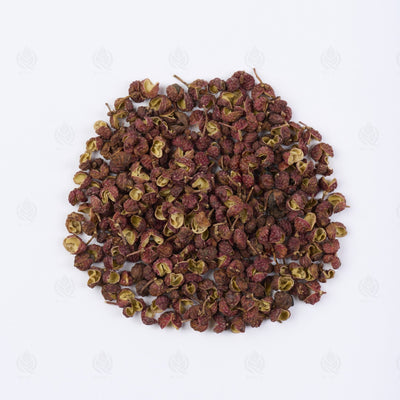
Sichuan pepper - 花椒 (Hua Jiao), for lifting complex flavors.
Four aromatics for composing, as the mood takes you, the warm table of the end of summer.
Towards the autumn to come
Soon the heat will withdraw for good, and the table will slide towards the flavors of autumn. Drier, keener, turned towards Metal.
But we are not there yet: a few weeks remain to savor, over a low flame, the round sweetness of the late season.